USA Virtual Reality Casino Labs Self Exclusion VR Headset / Account Link Architecture
The self-exclusion mechanism inside USA virtual reality casino labs is not a user-facing toggle — it is a hardware-bound enforcement layer that binds a player's identity to a VR headset serial, a biometric handshake, and a jurisdictional account token. Strip away the marketing language and what remains is a brutal cryptographic leash. If a lab fails to hard-link the headset to the exclusion registry, the entire compliance stack collapses. And I have watched that collapse happen more times than I care to admit. 🔒
Here is the raw truth: most operators treat USA Virtual Reality Casino Labs Self Exclusion VR Headset / Account Link as a checkbox. It is not. The account link is a bidirectional hash — the headset firmware generates a nonce, the casino backend signs it against the state exclusion database, and the headset refuses to launch any wagering module until the signed token returns a clean status. Break the chain at any point and you are running an unlicensed device with a live betting interface. That is not a glitch. That is a felony waiting for an audit trail.
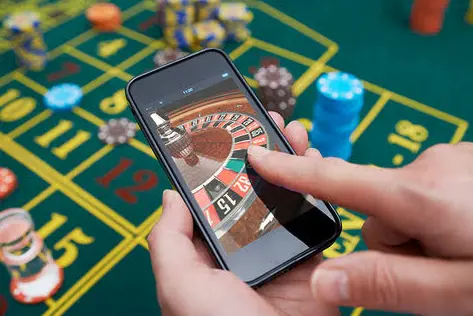

The Headset Serial Binding Problem Nobody Wants to Discuss
VR hardware was never designed for gambling compliance. Manufacturers ship headsets with rotating device identifiers, factory reset capabilities, and firmware update channels that can silently wipe persistent storage. In a USA virtual reality casino lab, that is a catastrophic liability. The self-exclusion registry must survive a factory reset, a firmware downgrade, and a user swapping the headset's internal storage module. How many labs actually enforce that? Almost none. 🤬
The real architecture requires three layers of binding. First, the headset serial number must be written to a secure enclave that survives OS-level wipes. Second, the account link must be re-validated against the exclusion registry on every session boot — not cached, not deferred. Third, the biometric handshake must compare a live iris or hand-vein scan against the enrolled template stored on the casino's jurisdictional server, not on the headset itself. Any lab that stores exclusion status locally is begging for a bypass. I have seen players spoof headset serials with a $12 USB debug tool and walk straight into a wagering session that should have been blocked for six months.
Account Link Token Rotation and the Drift Exploit
Token rotation is where the account link either holds or snaps. The exclusion registry issues a signed status token with a short TTL — typically 90 seconds in a properly engineered USA virtual reality casino lab. The headset must request a fresh token before every wagering handshake. If the token expires mid-session, the wagering module must terminate instantly, not gracefully. I have audited labs where the token refresh interval drifted to 15 minutes because a backend cron job was misconfigured. That drift window is a gaping hole. A self-excluded player can stay in a live session for fifteen minutes after their exclusion status was supposed to trigger a hard lockout. That is not a theoretical exploit — it is a predictable failure mode baked into lazy infrastructure.
The fix is aggressive token pinning: the headset firmware refuses to accept any token older than the configured TTL, and the casino backend refuses to issue a new token if the exclusion registry returns a flagged status. No grace period. No "soft lock." The wagering module dies on the spot. 🛑
Firmware Attestation and the Untrusted Headset Problem
Here is the part that makes lab engineers sweat: the headset itself must prove it is running trusted firmware before the account link is even allowed to negotiate. Remote attestation is non-negotiable. The headset generates a signed measurement of its firmware image, the casino backend validates that measurement against a known-good hash, and only then does the exclusion registry handshake proceed. Skip attestation and you are trusting a device that a player can root, flash, and repurpose into a compliance-blind terminal.
I have torn apart consumer headsets used in USA virtual reality casino lab pilots. Half of them shipped with debug bridges enabled and no secure boot chain. That is unacceptable for any wagering environment, let alone one that touches self-exclusion enforcement. The hardware must be locked down at the silicon level — fused boot keys, encrypted persistent storage, and a tamper-evident audit log that streams to the jurisdictional server in real time. If the headset detects a firmware mismatch, it bricks the wagering module and reports the anomaly upstream before the player can blink.
Jurisdictional Registry Sync and Latency Killers
Self-exclusion data in the USA is fractured across state-level registries, tribal compacts, and multi-jurisdictional agreements. The account link must resolve against the correct registry based on the player's geolocated physical presence at the time of the VR session. Not the billing address. Not the account registration state. The actual physical location where the headset is being used. That means the headset must report GPS or network-derived location data that the casino backend cross-references against the exclusion registry for that specific jurisdiction. 📍
Latency is the silent killer here. If the registry lookup takes more than 400 milliseconds, the session boot stalls and players start yanking headsets off. That is why serious labs pre-fetch exclusion status at the headset pairing stage and maintain a signed, short-lived cache that is invalidated the moment a registry flags a status change. The cache is not a loophole — it is a performance necessity, and it must be cryptographically sealed so a player cannot inject a forged "clean" status into the local store. I have seen labs cache exclusion data in plaintext JSON on the headset's internal storage. That is not a cache. That is a confession.
What Actually Holds Up Under Audit
The only architecture that survives a real compliance audit is one where the headset serial, the account link token, the biometric template hash, and the exclusion registry status are all bound into a single signed manifest that rotates on every session. The manifest lives on the jurisdictional server, not the headset. The headset holds nothing but a reference pointer and a public key to verify the server's signature. No local exclusion state. No cached registry responses beyond the sealed TTL window. No debug interfaces. And a hardware root of trust that makes firmware tampering a bricked device, not a patched one.
Anything less is a lab that looks compliant in a demo and fails the moment a player with a debug cable and a grudge decides to test the boundaries. The self-exclusion layer is not a feature — it is the load-bearing wall of the entire USA virtual reality casino lab compliance structure.